

AI FOR FINTECH SOFTWARE: THE BEST USE CASES FOR YOUR BUSINESS
Sept. 27, 2025
901

Table of Contents
According to recent industry reports, 85% of fintech companies are now using AI technology to improve their services. The global AI in fintech market is expected to reach $31.71 billion by 2025, growing at 23.17% annually. This shows how important AI has become for financial technology businesses.
The world of finance is changing fast, and artificial intelligence (AI) is leading this change. Fintech software powered by AI is helping businesses work smarter, serve customers better, and stay ahead of competitors. From small startups to big banks, companies are using AI to solve old problems in new ways.
In this blog, we will look into the most important ways of AI in fintech software. We'll explore how these tools can help your business grow, save money, and provide better services to your customers.
What is AI in Fintech Software?
AI in fintech software means using smart computer programs that can learn, think, and make decisions like humans. These programs can look at huge amounts of data, find patterns, and help make better business choices. For fintech companies, this means faster services, lower costs, and happier customers.
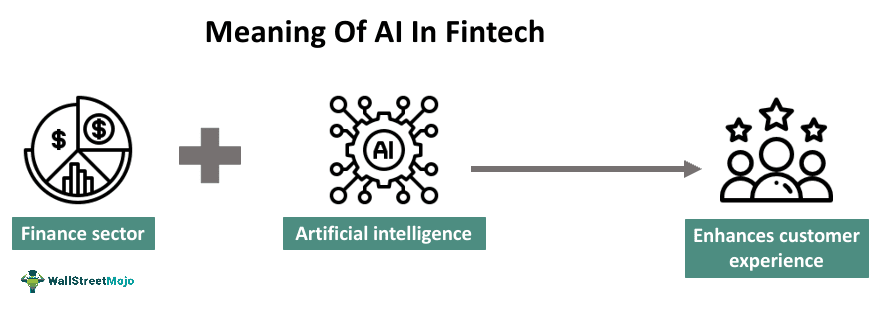
Image credit: wallstreetmojo.com
Top AI Use Cases for Fintech Software
Lets have a look on AI use cases for fintech software.
Fraud Detection and Prevention
Fraud detection stands as the most critical application of AI in fintech software today. According to a 2024 Juniper Research report, AI-powered fraud detection systems have reduced financial fraud losses by 38% compared to traditional methods. These intelligent systems work around the clock, analyzing millions of transactions every second to identify suspicious activities before they cause damage.
Modern AI fraud detection systems use machine learning algorithms that continuously learn from new data patterns. They examine transaction amounts, locations, timing, merchant categories, and user behavior to create a complete picture of normal activity. When something doesn't match these patterns, the system immediately flags it for review or blocks the transaction entirely.
Customer Service Chatbots
A recent Accenture study found that 73% of financial services customers prefer using chatbots for simple banking tasks because they provide instant responses without waiting in phone queues. These intelligent assistants can handle up to 80% of routine customer inquiries, from checking account balances to explaining transaction fees.
Smart chatbots in fintech software go beyond simple question-and-answer sessions. They can analyze customer emotions, understand complex financial terminology, and provide personalized recommendations. If a customer asks about high fees on their account, the chatbot can review their usage patterns and suggest a better account type that would save them money. These systems also learn from every interaction, becoming smarter and more helpful over time.
Risk Assessment
Traditional credit scoring methods are being transformed by AI technology in fintech software.AI-powered credit assessment can approve 25% more loans while maintaining the same risk levels as traditional methods. This is possible because AI can analyze thousands of data points instead of just the basic credit history that traditional systems use.
AI risk assessment systems examine alternative data sources that paint a more complete picture of a borrower's financial situation. They look at bank account patterns, payment history for utilities and rent, social media activity, education background, and even smartphone usage patterns. This comprehensive analysis helps identify creditworthy customers who might be rejected by traditional scoring methods, especially young people with limited credit history or immigrants new to the country.
Read more about From Code to Care: How Software Development is Reshaping Healthcare Services?
|
Traditional Credit Scoring |
AI-Powered Risk Assessment |
|
Uses 5-10 data points |
Uses 100+ data points |
|
Takes days to process |
Results in minutes |
|
High rejection rates |
More accurate approvals |
|
Limited to credit history |
Includes alternative data |
Personal Finance Management
AI-powered personal finance management has transformed how customers interact with their money through fintech software. Deloitte research found that users of AI-enabled budgeting apps save 23% more money on average compared to those using traditional budgeting methods. These intelligent systems analyze spending patterns, identify unnecessary expenses, and provide personalized recommendations to improve financial health.
Smart finance management tools use AI to categorize transactions automatically, track spending trends, and predict future expenses. They can notice when someone is spending more than usual in certain categories and send alerts to help avoid overspending. The AI can also identify subscription services that aren't being used, suggest better investment options based on risk tolerance, and even negotiate bills on behalf of customers.
Implementation Benefits by Business Size
|
Business Size |
Key AI Benefits |
Recommended Starting Point |
|
Startups |
Cost reduction, competitive edge |
Chatbots, basic fraud detection |
|
Mid-size |
Process automation, better customer service |
Risk assessment, advanced analytics |
|
Enterprise |
Full-scale transformation, regulatory compliance |
All use cases with custom solutions |
AI in Your Fintech Software
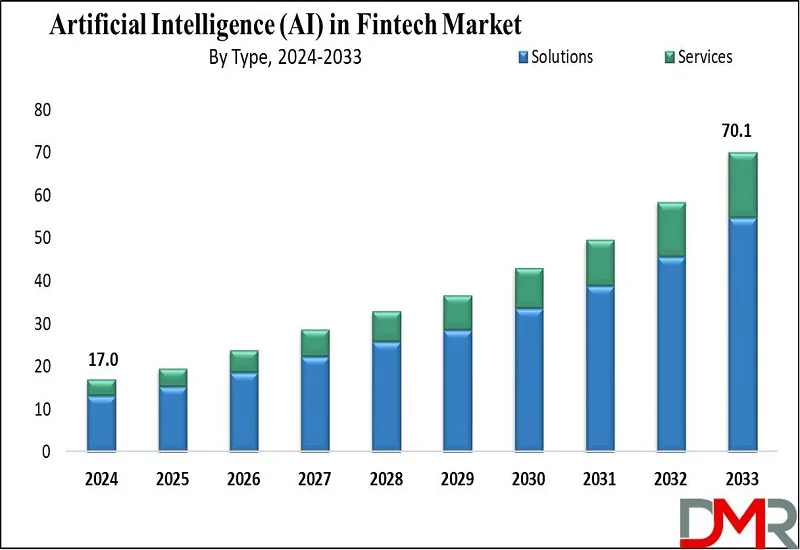
Artificial Intelligence (AI) in Fintech Market size is expected to reach USD 17.0 billion by 2024 and is further anticipated to reach USD 70.1 billion by 2033 according to Dimension Market Research. The market is anticipated to register a CAGR of 17.0% from 2024 to 2033.
To begin with AI in fintech, you need to identify the main challenges in your current setup where AI can be most useful. Common areas include high costs in customer service, manual processes for detecting fraud, slow loan approval times, and weak risk assessment methods. After recognizing these needs, you should carefully choose an AI solution that fits your budget, matches your technical skills, integrates well with your existing systems, and can scale as your business grows. It’s best to start small by implementing one AI feature at a time.
This approach helps you learn which solutions work best, allows proper training for your team, keeps costs manageable, and reduces risks. Always measure the results by tracking important indicators like cost savings, customer satisfaction, process speed, and error reduction to make sure that AI is delivering value.
Read more about Digital Transformation in Supply Chain: How Tech Is Creating Resilience?
Challenges
Even though AI brings many benefits, there are important challenges to keep in mind. The quality of your data is important because AI depends on good data to produce accurate results; poor data will lead to poor outcomes. Financial services also face strict rules about using AI, especially concerning customer data protection and regulatory compliance. Integrating AI into existing systems can be complicated and expensive, and your staff needs proper training to understand and manage AI tools effectively. These factors require careful planning to avoid common pitfalls.
Future Trends in Fintech AI
According to the FinTech Insights 2025 report, over 70% of fintech firms plan to increase their investment in AI within the next two years to boost security, customer experience, and regulatory compliance.
The future of AI in fintech looks very bright with some exciting trends emerging. Voice banking will allow customers to manage their finances using voice commands, making banking more convenient. Predictive analytics will enable AI to anticipate customer needs before customers even ask, improving personalized services. AI will increasingly work alongside blockchain technology to enhance security and trust. Regulatory technology will automate compliance processes, helping fintech companies follow rules more easily.
ROI and Cost Considerations
|
AI Use Case |
Average ROI |
Implementation Time |
Cost Range |
|
Fraud Detection |
300-400% |
3-6 months |
$50K-$500K |
|
Chatbots |
200-300% |
1-3 months |
$10K-$100K |
|
Risk Assessment |
250-350% |
6-12 months |
$100K-$1M |
|
Algorithmic Trading |
150-250% |
6-18 months |
$500K-$5M |
Explore more about the AI and Data Engineering Services here.
Conclusion
Companies that start using AI today will have a big advantage over those that wait. The key is to start small, choose the right use cases for your business, and build your AI capabilities over time.Whether you want to stop fraud, improve customer service, or make better lending decisions, AI can help your fintech software do more with less. The technology is ready, the tools are available, and the benefits are clear.
Don't wait for your competitors to get ahead. Start exploring AI for your fintech software today with CodeSuite services and see how it can transform your business. Remember, the best time to start was yesterday, but the second-best time is right now.
By choosing CodeSuite’s AI-driven fintech solutions, your company can provide better, personalized services. CodeSuite offers fast model integration, secure cloud-native infrastructure, and built-in compliance, so your fintech software gets live sooner and stays ahead of evolving security and regulatory challenges.
Start building smarter, more scalable fintech solutions with CodeSuite today.You can avail Codesuite Don't wait for your competitors to get ahead.